
Depression Hurts…
When I was a kid I remember seeing the commercial for Cymbalta. The tagline went as such, “Depression hurts, Cymbalta can help.” I remember feeling so confused. What was depression? Why does it hurt? Why do people need to take medication for sadness? Other commercials I remember seeing featured cartoon people with rain clouds over their heads or black holes in the ground. There was even a commercial that featured a wind-up doll who couldn’t stay wound up. It was fair to say that I never knew what depression was or why these commercials depicted it so ominously.
What is Depression?
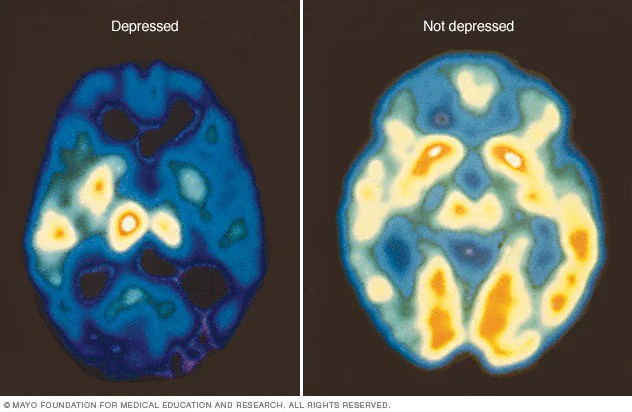
The National Institute of Mental Health (NIMH) states that…“Depression (major depressive disorder or clinical depression) is a common but serious mood disorder. It causes severe symptoms that affect how you feel, think, and handle daily activities, such as sleeping, eating, or working.” From the American Psychiatric Association, “Depression causes feelings of sadness and/or a loss of interest in activities you once enjoyed. It can lead to a variety of emotional and physical problems and can decrease your ability to function at work and at home.”

It’s important to distinguish the difference between sadness and depression. Often people use the word “depressed” to describe how they are feeling but depression itself is a mental illness. It’s also important to note that depression CAN ONLY BE DIAGNOSED BY A MEDICAL PROFESSIONAL (such as a psychiatrist). We all experience sadness, grief, and even some of the symptoms of depression from time to time. But a diagnosis of major depression is not the same.
How Do You Know if You Have it?
Again, depression is not just sadness. It is a feeling of constant emptiness, worthlessness, and hopelessness. Like there are weights attached to your limbs at all given times dragging you down. Your body feels heavy, your mind foggy and tired. You feel drained and fatigued because your mind is constantly fighting an internal battle. The difference between sadness and depression is that depression is often very debilitating. It will sneak its way into every aspect of your life. It affects school for example and your ability to finish assignments and focus in class. It affects work and your ability to complete simple tasks or stay energetic. It affects your relationships and your self-esteem. It affects your sleep (or lack thereof), your appetite, your physical health and well-being, etc. etc. etc. The list goes on.
If you’re unsure whether you’re experiencing depression or sadness, it never hurts to talk to a medical professional.
What Causes it?
Depression can be caused by a chemical imbalance in the brain, genetics, personality (as some individuals are more easily affected by stress or have low self-esteem), and lastly environments where neglect, abuse, violence, or poverty is found. Depression can also be caused by more than one of these factors and oftentimes is.
Can It be Treated?
Yes, in most cases, treatment is shown to significantly ease symptoms of depression. What is the treatment you might be asking? There are many ways to combat depression. One of the first steps people usually take is seeing a therapist/counselor/psychologist/psychiatrist. Trained professionals will usually be able to help you find ways to cope with the symptoms you’re experiencing or at least get you on the right path to acquiring the help you need. A psychiatrist will be able to officially diagnose you.
What Is It Like Taking Medication for Depression?
For many, medication is highly successful at suppressing their depressing feelings. You may be thinking, “well that’s great!” But many people on anti-depressants also tend to feel as though their medication has changed who they are. Unfortunately for the people who experience that, they often have a hard time keeping up with their medication or they end up stopping it altogether. It’s important to always take notice of how you are feeling when taking medication and also that you are communicating with your psychiatrist or therapist. Stopping medication without supervision can be detrimental.
Alternatives to Medication
If medication is not the route for you either for personal reasons or it just didn’t work for you, that is when you can look into therapy if you haven’t already done so.
You can use this website to find therapists or psychiatrists in your area: https://www.psychologytoday.com/us
Do I See a Therapist? Counselor? Psychiatrist? Psychologist??
Like I mentioned earlier, there are many ways to combat depression. One option is through talk-therapy. Psychiatrists can diagnose you and prescribe medication. Counselors are usually sought out for more short-term issues such as in marriage/couples and family counseling, career counseling, substance-abuse counseling, and grief counseling. Therapists are sought out for more long-term help. They often seek to help you understand yourself, your behaviors, and the world around you. The term “Therapist” however, tends to be used as an umbrella term for all professionals in this field. So what the heck are psychologists? Psychologists, unlike therapists or counselors have an educational background specifically in psychology. They are more educated in the actual science behind what is going on in your mind.
What Is Therapy Like?
Therapists hold sessions in their private offices. Don’t let the word office fool you though. Their “offices” are designed with comfort in mind. There are often comfortable chairs and sofas, books, magazines, warm lighting, water, tea, coffee, and sometimes even snacks. It’s always very quiet and peaceful. Many therapists also have white-noise machines either in their offices or outside the door. The sofa is usually intended for the patient. That way you are free to sit or lay however you’d like. Techniques used by therapists during sessions include cognitive behavioral therapy which means helping patients become aware of their thought processes as well as questioning it, finding solutions to issues, teaching about healthy coping strategies, teaching mindfulness, meditation, journaling and deep breathing, tracking emotions and thoughts, and creating safety plans for when patients are feeling particularly overwhelmed or in harms way. There isn’t one set way to treat individuals. Treatment plans are customized to your needs.

What Are Some Therapy Green Flags?
- A good therapist will spend more time listening than talking however they will also be well trained in leading discussions
- They will make you feel comfortable
- They will ask follow up questions
- They will not sugarcoat or dance around the truth
- They will know how to help you de-escalate your emotions
- They will repeat what you say back to you for clarification
- They will ask important questions especially if it concerns your safety
- They will NOT use their phone, stare off into space, or distract themselves with things around them
- They will not roll their eyes or offer their opinion
- They will take everything you say seriously
- They will make you feel like you can trust them
What Are Things You Can Do to Help Alleviate Some of the Symptoms of Depression?
A skill that people with depression often learn is self-soothing. As someone with depression myself, I have now spent years trying to figure out what works for me through trial and error. And that is a skill you will also most likely pick up if diagnosed with major depressive disorder. When the hopelessness and emptiness is overbearing, it’s important to find out what helps. What makes you feel safe? Comforted? Warm? Loved? Beautiful? etc. I’d like to add that doing this on your own can be very difficult and seeing a therapist is recommended.
Some of My Tricks Include:
- Putting on warm and comfy clothes (hoodies are particularly nice to hide in).
- Eating tasty food. It can be greasy if you want. In the moment, what matters more is your mental well-being. Have some chicken nugs if you need to
- Taking a warm shower or bath and staying in there for as long as you need
- Lighting a candle (or 2)
- Hugging a friend, family member, or pet
- Listening to relaxing music
- Writing in a journal
- Talking to someone that cares
- Going for a walk
- Splashing my face with water
- Having a drink, whether its a beer or a glass of wine
- Smoking cigarettes, weed, CBD, etc. Again, in the moment, what matters most is your mental well-being. The goal is to find healthy coping strategies but if it’s a matter of life and death, one glass of wine or one cigarette will not kill you. But make sure you are working towards finding healthy coping strategies.

Suicide
Those with depression often feel suicidal. The hopelessness and worthlessness can sometimes be too much for one person to carry all by themselves. If you do not have a safety plan for when you are feeling suicidal, come up with one now. Figure out a place where you feel safe and people that make you feel safe. Make sure you have reliable contacts for when you feel like you are in danger. There are always hotlines you can call.
- National Suicide Prevention Line: 800-273-8255
- Crisis Text Line: text HOME to 741-741
- Lifeline Crisis Chat: https://suicidepreventionlifeline.org/chat/
Suicide does not have to be the answer. Though it may feel like the pain will never go away, it will. You may feel as though life is not worth living. Find things that ARE worth living for. Cling to those until you can get the help that you need.
Sources Used
- https://psychiatry.org/patients-families/depression/what-is-depression
- https://www.nimh.nih.gov/health/topics/depression#part_2257
- https://www.nimh.nih.gov/health/topics/psychotherapies

 The Ultimate Guide to Living a Healthier and More Beautiful Life
Love your post and love you. ❤
LikeLike
This is such a helpful post. Will share ❤️
LikeLiked by 1 person
Very informative
LikeLiked by 1 person